
Egypt's ports for machinery
| Port | Coast | Notes |
|---|---|---|
| Alexandria | Mediterranean | Egypt's main port, in the north of the country |
| Port Said | Mediterranean | At the northern entrance of the Suez Canal |
| Damietta | Mediterranean | On the Nile delta coast, east of Alexandria |
| Sokhna | Gulf of Suez (Red Sea side) | The arrival port on the fastest container route from Japan in Fluent Cargo's data |
Car From Japan's import notes list Alexandria, Port Said, and Damietta as Egypt's major ports for used vehicles. Ask your carrier which of the four it serves from your loading port, then pick the one closest to the site.
Transit times when shipping from Japan to Egypt
| Route (port to port) | Container transit, according to Fluent Cargo |
|---|---|
| Kawasaki to Sokhna | About 24 days 17 hours |
| Kobe to Alexandria | About 28 days |
| Hakata to Alexandria | About 34 days (with transshipment) |
| Tomakomai to Alexandria | About 41 days 7 hours (two transfers) |
Those are port-to-port sea times. Inland transport in Japan, the wait for the next sailing, and clearance in Egypt sit on top of them.
The Red Sea route in 2026
Ships from Japan reach Egypt's Mediterranean ports through the Red Sea and the Suez Canal. From early February 2024 to mid-2026, container ship capacity through the canal averaged about 11% of 2023 levels, according to BIMCO's chief shipping analyst, after carriers moved to the longer route around the Cape of Good Hope to avoid attacks in the Red Sea.
The return picked up in the second half of 2026. In the first two weeks of October, weekly container capacity through the canal averaged 753,000 TEU, against 1,457,000 TEU in the same weeks of 2023 (Clarksons Research figures cited by BIMCO). Alphaliner reported on 21 October 2026 that container lines had moved 63% of their Far East to Europe capacity back to the Suez route, and Seatrade Maritime reported that a full return for container carriers was expected by the first quarter of 2027. Seatrade Maritime also reported industry concern over a widening conflict between Saudi Arabia and Yemen's Houthis in the same month.
For a booking made now, ask the forwarder which routing the sailing uses, and how the schedule changes if the carrier reroutes. Sokhna, on the Gulf of Suez, avoids the canal transit, and ships still cross the Red Sea to reach it.
Container, RoRo, or flat rack
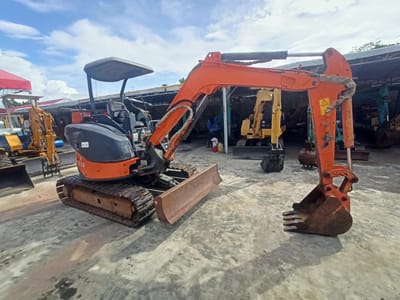
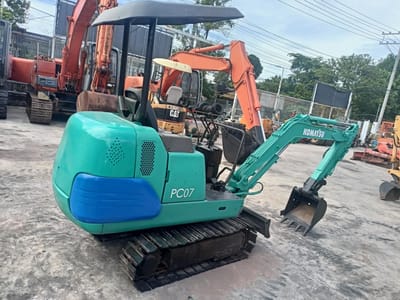
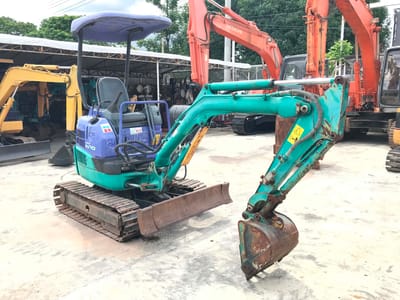
The shipping method follows the machine. A mini excavator travels well in a container with its buckets and spare parts, and larger machines go RoRo or on a flat rack (how each method works).
A paperwork timeline that fits the sailing
| Step | Timing |
|---|---|
| Importer files on Nafeza and receives the ACID | Before the exporter submits documents |
| Exporter uploads documents on CargoX | At least 48 hours before the vessel leaves the port of loading (DHL) |
| Sea transit | About 25 to 41 days, depending on the route (Fluent Cargo) |
| Clearance in Egypt | CargoX reports 3 to 6 days under ACI, and the US Commercial Service advises allowing at least two weeks for import and customs procedures |
Before you book
- Confirm the destination port is the one closest to the site among the ports your carrier serves.
- Ask which routing the sailing uses, and what happens to the schedule if it changes.
- Get a landed price that covers freight, port charges, duty, VAT, brokerage, and inland delivery.
- Check that the importer's Nafeza filing and the exporter's CargoX account are ready before the booking.
- For used machines, settle the classification with an Egyptian customs broker first (what Egypt allows).