
What Egypt's Advance Cargo Information system is
Advance Cargo Information (ACI) is Egypt's pre-clearance system for imports. It became mandatory for all sea freight on 1 October 2021, after a six-month pilot, and it runs through Nafeza, Egypt's national single window for foreign trade. The system was set up under Customs Law No. 207 of 2020, and air freight became mandatory on 1 January 2026 after a pilot that ran to the end of 2025.
Under ACI, Egyptian Customs receives a shipment's data and documents before the cargo leaves the export country, and it runs its risk assessment before the ship arrives. DHL describes the aim as monitoring risk and keeping unidentified goods, and goods from unidentified sources, out of the country.
Who does what
| Party | What they do |
|---|---|
| Egyptian importer (or customs broker) | Registers on Nafeza, receives an e-token for signing, files each shipment, and receives the ACID |
| Foreign exporter | Registers the company on the CargoX platform, completes its verification, receives the ACI notification with the ACID, and uploads the shipping documents |
| CargoX | Transmits the exporter's filing to Nafeza for review |
| Shipping line or forwarder | Carries the ACID on the vessel manifest |
The importer starts the process, and the exporter can't finish its part until the ACID exists. DHL's guidance stresses that importer and exporter now have to work together on every shipment.
What the ACID number is
The ACID (Advance Cargo Information Declaration number) is a unique reference number for one shipment. Customs validates the importer's filing and issues it, and the exporter receives the same number through CargoX. For each consignment, the ACID has to appear on the commercial export documents.
| Document | Carries the ACID |
|---|---|
| Shipping order | Yes |
| Commercial invoice | Yes |
| Bill of lading | Yes |
| Vessel manifest | Yes |
The timing
DHL's guidance sets the deadline at least 48 hours before the ship leaves the port of loading. By then the ACID, the invoices, the exporter's details, and the shipment data have to be submitted. For a machinery shipment from Japan, the importer files while the unit is still being prepared for vanning or RoRo loading, and the exporter uploads its documents as soon as the ACID arrives. Shipping machinery from Japan to Egypt covers the ports, transit times, and the Red Sea route.
What happens when ACI is missing
According to DHL, a shipment without ACI isn't allowed to enter Egypt, and the goods are returned to the port of origin. DHL lists importers, foreign exporters and suppliers, clearance companies, and shipping companies as the parties the system affects.
Machinery and spare parts
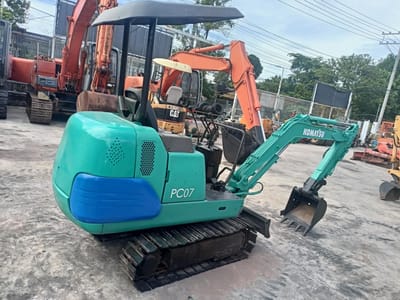
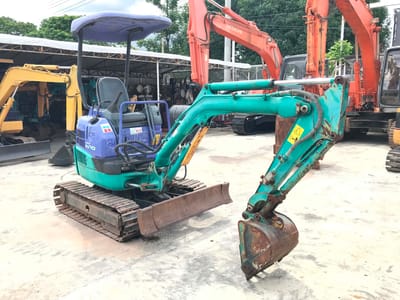
Machines shipped to Egypt carry two more paperwork points. Equipment, machines, and apparatuses must carry a label on the body or the package that shows the country of origin in Arabic, English, or French (a Decree 770 of 2005 requirement, according to Bureau Veritas). The US Commercial Service adds that the data on a machine should be identical to the data on its package, and that the country of origin should be on each item and non-erasable.
For urgent spare parts sent by air, the air version of ACI applies. The documents exporters upload for air freight include the air waybill, the invoice, the packing list, an invoice in Nafeza XML format, and the certificate of origin, and an existing CargoX account used for sea freight works for air shipments too.
Used machines have their own import rules in Egypt (what's allowed, and the age limits on vehicles).
A checklist before the booking
- The importer (or their broker) is registered on Nafeza and has a working e-token.
- The exporter's CargoX account is registered and verified.
- The consignee details match across the invoice, the packing list, and the bill of lading.
- The ACID has been issued, and the exporter has it, before the vessel's 48-hour cutoff.
- The ACID is printed on the shipping order, the commercial invoice, and the bill of lading.
- The machine carries a country-of-origin label in Arabic, English, or French.
What ACI changed
CargoX, the company that runs the document platform, reports that ACI cut cargo release time from 29 days to 3 to 6 days, and compliance costs for shippers from more than US$600 to US$175, in a presentation shared by the German-Arab Chamber of Industry and Commerce. Those are the platform operator's own figures. The US Commercial Service still advises that import and customs procedures in Egypt take no less than two weeks, and a shipping plan is safer built on the longer number.