
The general rule under EO 877-A
Executive Order 156 (2002), as amended by Executive Order 877-A (2010), prohibits importing used motor vehicles into the Philippines, except for the vehicles the order lists. Used engines, parts, and components of motor vehicles are regulated as well, and they need prior import clearance from the DTI's Fair Trade Enforcement Bureau (FTEB).
The list of regulated used vehicles sits in Article 2, Section 3 of EO 877-A, and the DTI runs a separate application for used trucks, buses, and special purpose vehicles. Whether a particular truck qualifies depends on its category under the order, and that's the first thing to settle before a unit is bought in Japan.
The Certificate of Authority to Import
According to the Bureau of Customs, only qualified used motor vehicles may be imported, only by qualified importers, and each one must be covered by a Certificate of Authority to Import (CAI) from the FTEB. The CAI has to be secured before the vehicle is imported. The Land Transportation Office publishes its own checklist of requirements for completely built-up used trucks, buses, and special purpose vehicles imported under EO 877-A.
Freeport zones
EO 877-A states that the import prohibition doesn't cover importation into the Freeport Zones. Bringing a vehicle from a freeport into the rest of the country is a separate step, and for a freeport-sourced truck you should ask the seller how it was cleared for use outside the zone.
Right-hand drive and RA 8506
Republic Act 8506, approved on 13 February 1998, makes it unlawful to import, register, use, or operate a vehicle with a right-hand steering wheel on any public or private street, road, or highway. A violation carries prision correccional in its medium period and a ₱50,000 fine. The law's exemptions cover vintage automobiles, vehicles for motorsports events, and off-road special purpose vehicles.
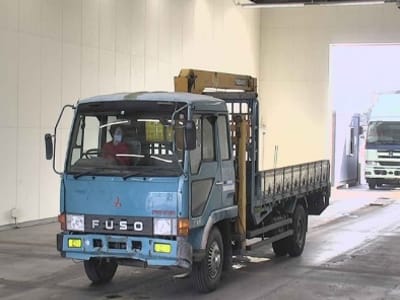
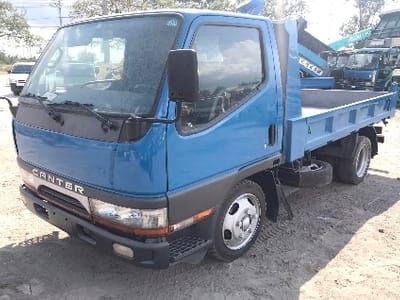
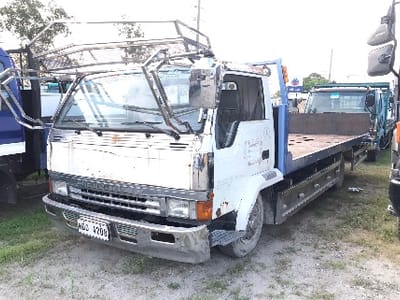
Japan drives on the left, and its domestic trucks are built right-hand drive. A Japan-surplus truck is converted to left-hand drive before registration, and the Philippine National Standard PNS 1259 sets the requirements for repositioning the steering from right to left.
A good conversion moves the steering column, the pedal box, and the controls, and the truck should drive like a factory left-hand-drive unit afterwards. Check the steering for play, the pedals for alignment, and the welds around the new mounting points.
Heavy equipment is classified separately
The used vehicle products covered by EO 877-A sit in HS Chapter 87, headings 87.02 to 87.08. Excavators, bulldozers, and similar machines are classified in Chapter 84 (heading 84.29), outside that list. They still go through customs, duty, and VAT, and your broker should confirm the classification of each machine before it ships.
What to ask for when you buy an imported truck
| Ask for | What it shows |
|---|---|
| CAI and customs entry papers | The truck came in through the allowed route. |
| Export certificate from Japan | The chassis number and the truck's registration history in Japan. |
| Conversion details | Who converted the truck, and to what standard. |
| OR/CR from the LTO | The truck is registered for Philippine roads. |
| Chassis and engine numbers | The numbers stamped on the truck match every document above. |
How Workline handles it
For the units we import, we coordinate customs clearance, LTO registration, and right-hand-drive conversion where it's needed. Browse used trucks in stock, or send an auction request if the truck you need isn't in the yard. Our Isuzu Elf checklist covers what to inspect on the truck itself.